Tuesday, August 27, 2013

 
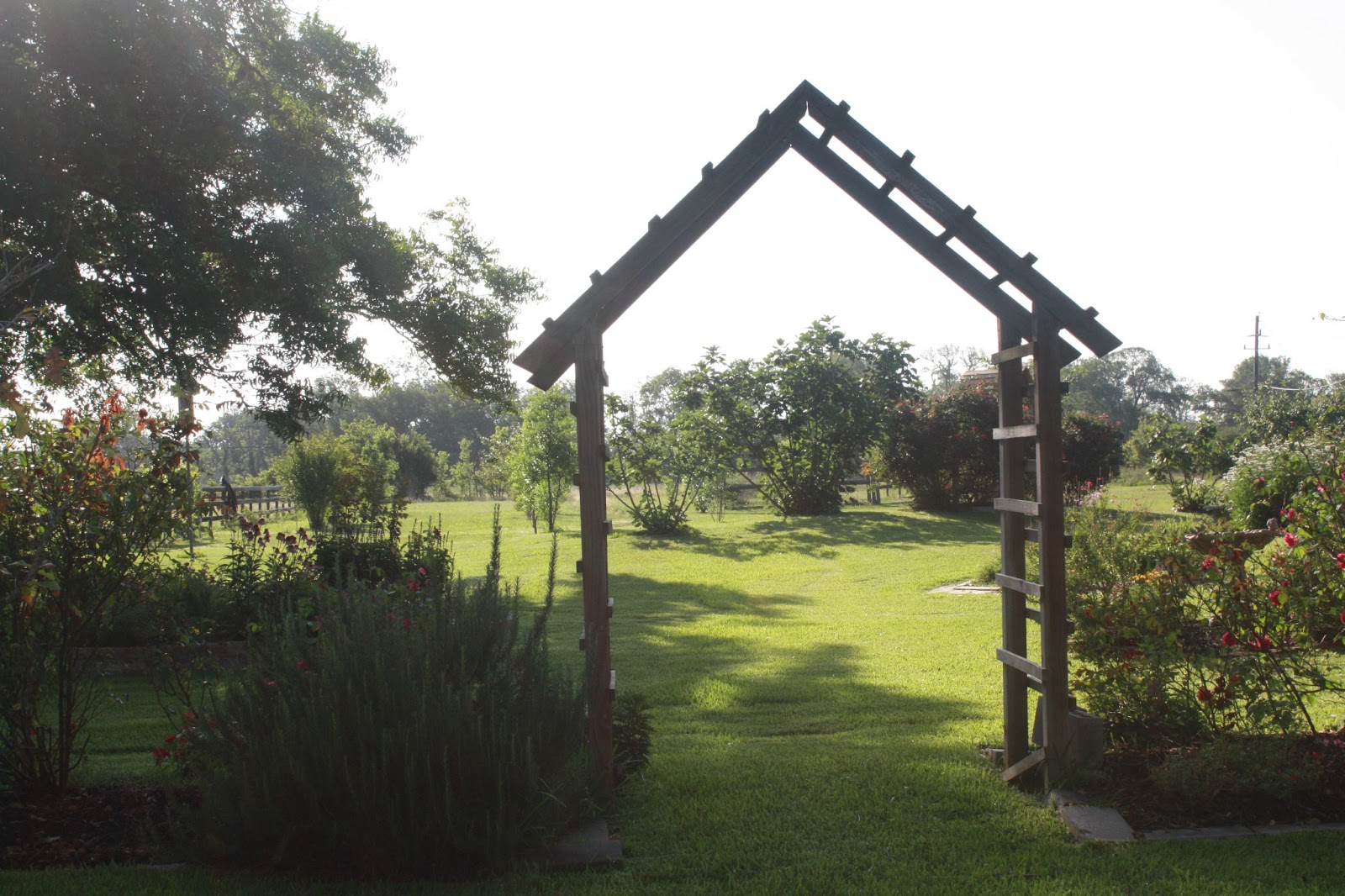
The sunrise was so lovely this morning.  The sun behaved gently; it did not show itself as a sizzling orb before lighting the sky most delicately.
 
There's a lot going on in the garden right now, including, at this very moment, buckets and buckets of rain!  Whoop whoop yee-haw hooray!  The weather has been milder this week, in the low to mid-90's during the day and often cloudy, which makes a difference if you're working in the garden. As September draws near, many plants that go semi-dormant in high summer are preparing to show off once again.  The roses are beginning to bloom more vigorously, Mexican bush sage, salvia leucantha, is almost in full bloom, and those few plants I took the time to prune earlier in the summer are coming back strong.  Hummingbirds are everywhere and, indeed, bird activity in general is beginning to pick up.  I've seen lots of butterflies, too; sometimes I feel I should never walk outside without my camera. 


But I should not give credit only to those plants returning full force with milder weather.  What of the plants that have bravely faced the heat day in, day out?  One of my favorite annuals is globe amaranth, also known as bachelor's buttons.  Gomphrena globosa is from the tropics and gomphrena haageana is a Texas native and there are lots of hybrids between the two.  These plants love the heat and butterflies love these plants.


I learned three things about the globe amaranth today:  it is a designated Texas Superstar, it makes a nice tea, and the globes aren't flowers but bracts.  I wasn't surprised that it's a Texas Superstar; I was surprised that I was surprised!  It's tough, reliable, and maintains its good looks throughout the hottest season of the year.  I was a little surprised that the dried globes make a mildly sweet herbal tea that's reputedly good for the skin.   I was very surprised that the globes aren't flowers!  The flowers are hardly noticeable.


Can you see the tiny, yellow flowers?

I have my doubts about its anti-aging effects (although I suppose it's worth a try), but I do know that it's a cheerful addition to the garden, even on a rainy day.  I wish all of my plants were looking so perky; I think they will soon enough!


Tuesday, August 13, 2013

Purple Passion


When we say we love or hate something "with a purple passion", what does that mean?   Although it indicates strong emotion, when I checked out purple on the color wheel, I did not find it a particularly passionate color.  It denotes royalty, wisdom, creativity, magic, and mystery, amongst other things.  I tried then to substitute the various connotative words for the word "purple".  Wise passion (no), creative passion (yes), magical passion (maybe), mysterious passion (?), royal passion. . . .  I liked "royal passion" best, as it sounds rather grand, so I looked up the word royal.  Merriam Webster offered an interesting variety of definitions -- the obvious being "of, relating to, or subject to the crown", the surprising " requiring no exertion", and the most useful for my purpose, "of superior size, magnitude, or quality" and "magnificent".  To love something and especially someone with a "magnificent passion" sounds good to me!

But this is not a romance novel!  This is about my magnificent purple blooms, although true they aren't particularly magnificent at the moment, nor do I have a particular passion for purple.  I like it, though, and certainly enjoy it in the garden.  Strolling amidst the various beds and blooms this morning, I somberly concluded that the gardener is equally to blame with the weather if certain plants aren't looking their best.  Yet most of our plants are well-chosen and finally well-placed and they are tough enough to bloom despite the heat, humidity, and negligent gardener (for shame).

First, the bluebells:


Then the ruellia:


Next verbena:


Duranta:

 
The salvia begins its comeback from a severe trimming:
 
 
And finally, Angelonia:


I feel that it's very appropriate to wish everyone a wonderfully purple week, a week that's wise, creative, magical, magnificent, with as much passion as you wish for!  

Tuesday, August 6, 2013

Hunkering Down in High Summer


Hi, Everyone! 

Do you remember me?  I hope so and I also hope that you've been having a great summer.  It's been a hot, hectic season for me so far with a lot of joy as well as a fair dose of stress.  Isn't that life?  I didn't mean to disappear so suddenly.  I've missed reading my favorite blogs and writing about my garden.  As for my garden, aside from dashing out to the orchard or for some herbs now and then, I've hardly seen it!  At dawn and dusk, the mosquitoes would gladly take a gardener as a meal.  I haven't been home much in the middle of the day, but if I were, I would have to garden in spurts.  We finally had our annual midsummer breakdown and hired some workers one weekend to help us tidy things up.  For now, everything is mulched and more or less weeded.  But it's such a sauna out there; even our hardiest summer bloomers aren't thrilled.  They are, however, persistent.  That's the beauty of drought-resistant, heat-loving plants.


salvia
 
 cosmos


 firebush
 
 lantana
 
 jasmine
 
I am eager to learn news of other gardens, the weather, the challenges, the home runs.  As for me, it's the time of year that I prefer to do most of my gardening from the proverbial armchair.  Just as gardeners in cold climates have a little more time to dream in deep winter, those of us in hot climates sometimes find it a relief to take a breather in high summer.  At least, I do!


Saturday, June 22, 2013

An Online Gardening Class


Yesterday, I enjoyed a peaceful few hours tidying up the North Garden.  I removed countless spent blooms, pulled a few weeds, and organized my small potting shed.  Today, I thought I would spend the greater part of the day in the garden.  I was so excited; I had grand, ambitious plans for my day's work.  But after an hour or so of dealing with the elements, I changed my  mind!  I simply was not in the mood for heat, humidity, and bugs.

It was fine.  I had another sort of gardening work to do!  I have been enjoying a short, online gardening course even though I started late and have been behind ever since.  Perhaps you've heard of  "My Garden School", founded by Elspeth Briscoe and Duncan Heather.  Horticultural courses are offered by many different experts, covering topics as diverse as organic gardening, garden design, natural beekeeping, and pond and lake construction, to name a few.  From what I've seen, most or all of the courses are four weeks long and every week there is a video and accompanying notes that can be downloaded and printed out, assignments, and one on one dialogue with the teachers.

In a previous blog, I mentioned wanting to learn more about gardening history.  I thought I could teach myself and so I could, but what an immense topic!  Finally, I thought I should look online for some sort of course outline to give me an idea of how to go about it.  I was happily surprised to stumble upon Toby Musgrave's "Garden History Matters" website (http://www.gardenhistorymatters.com/) and astonished to find that he was teaching an online class about garden history.  What a grand coincidence and so far, it's been a grand experience, too.  Professor Musgrave, who has authored several gardening books, provides an interesting, succinct trip through the ages, examining and explaining the history of gardening, how it developed, different gardening styles, and more.  I am afraid that I've been a rather difficult student, always asking questions, but he's answered them swiftly and thoroughly.  I've learned a great deal.  As I mentioned, it's a vast subject, but Professor Musgrave has broken it down very neatly.

There are other benefits to My Garden School.  For one thing, once an online class has been published, it can be accessed at the student's convenience; the video can be watched again and again. Students have the opportunity to learn from some of the best in the field; these experts also contribute to a blog.  Another plus is the staff; I've found everyone to be kind and helpful.  Here I was, in the U.S., wanting to sign up for a class that's managed in the UK and had already started.  But they made it easy; their correspondence was prompt and very pleasant.  I love it! 

So if you feel like treating yourself to a convenient gardening class from an expert, you might want to check out My Garden School:  http://www.my-garden-school.com/.  If you are interested in garden history, Toby Musgrave's class is not to be missed.

Tomorrow, I suppose I will have to go outside and do some actual hands-on gardening.  We have some nice blooms, but there's a lot of work waiting, too!


Tuesday, June 18, 2013

A Mowing Adventure

 
This egret decided to check out our pool.  You do not see the pool because that image would involve the Waterfall Bed, which is unfortunate material for a blog post of its own.  To put it mildly, it is a work in progress.
 
I hope that everyone had a nice weekend and that all of the dads out there enjoyed a happy Father's Day.  My husband went on a fishing expedition and, since he was returning on Father's Day, I thought it would be nice if I mowed the yard for a change.  Now that we're well into June, it has to be done weekly for best results and it had already been a week and a half.  Usually, around mid-July, when it gets really hot and hectic, we give up and pay someone to do it for us.  But we hold out for as long as we can. 
 
But I hadn't operated the mower in over a year, at least.  The last time I tried, I think I got stranded in a trench.  Sunday, I couldn't even remember how to start it.  I sat on the thing for fifteen minutes before I finally figured out what to do.  I thought I could finish the front in about an hour, maybe less, but an hour later, I was still in the middle of the front lawn.  The zero-turn mower was moving so slowly.  Could it be the height at which I set the blades?  But they weren't that low.  Perhaps it was because the grass was still damp.  I chugged along. 
 
Finally, as the sun rose high and the humidity set in, I took a water break.  The mercury was edging up to the mid 90's.  As I climbed back onto the mower, I noticed a long-forgotten lever:  speed.  Of course!  I zoomed off, then, at a hazardous pace, really, considering my morning so far.  But I was in a hurry; I had to go over the grass twice to take care of the thatch.
 
I had originally planned to mow only the front lawn and the gardens on each side of the house.  But then I looked at the orchard.  What if my husband wanted to go check things out?  Should he have to wade through the tall grass?  Tall grass can be dangerous, especially in a field.  I should mow the orchard. 
 
It seemed silly, then, to leave the path towards the burnpile high with weeds and grasses.  So I mowed that, too.  I must admit that I sighed as I realized how silly it would look if I left half the field unmowed.  So I took care of the rest.  I ran out of petrol once and had to run all the way back to the garage to fetch more; that heavy, plastic jug rode on the mower for its trip back to the house.
 
I am glad that I mowed the whole thing.  I don't like doing things by half.  It was interesting, too, and sort of scary -- an adventure.  I don't really know how my husband navigates large rose bushes, fig trees, and other bushy areas.  At one point, roses caught my shirt without my realizing it.  It was only when I felt thorns in my shoulder that I realized a small rose branch was attached to me!  I'm still surprised that the branch gave instead of my shirt. As for the fig trees, I tried ducking under them and of course got slapped in the face.  In the front I noticed poison ivy growing up a pecan tree and into the grass.
  
But I also saw flowers.  The Mexican hat was blooming itself out at the back of the field.  I noticed a coral vine had spread from the back of the next property to our fence,, which made me happy.  I saw that the figs were looking great before I closed my eyes. 


At least I avoided capsizing the lawn mower (I avoided the trenches altogether).  What's really important was that my husband, who works very hard all of the time, was surprised and relieved that it was done and, according to him, well done.  That last part was really appreciated.


Monday, June 10, 2013

The North Garden


Do you have names for different sections in your garden?  Some designations are essential and obvious, such as the vegetable garden or patch, the front hedge, the cutting garden.  I have lots of names for different sections of our four acres.  It makes things feel more intimate and a little bit easier.  The North Garden is my favorite.  When we first moved in, there was only grass.  First we separated it from the front with a rose hedge and arbor.  Then we created beds.  We made lots of mistakes the first few years, but we are finally getting past them. 


I like the North Garden because it is easily accessed from our back patio and because of its location.  There is only one tree and it's along the fence line, but being on the north side of the house does mean that it has its shady spots.  I remember how surprised I was when I first realized that people living in milder or colder climates than ours seek southern exposure.  In our climate, the south side of a home receives the sun's sizzling, unrelenting glare all day.  Thanks, but no thanks (although our South Garden is lush by midsummer).

Even my small vegetable patch appreciates a little shade from the harsh afternoon sun. 


The orchard is in the distance.  We have had a hard time with the orchard.  The first year we moved in, we spent a great deal of time, money, and surely our sons' goodwill filling the field with one or two of every fruit tree the county extension recommended.  What we learned was that a citrus tree that might do well in a protected backyard would freeze to death in an open field, no matter the recommendation.  We lost approximately twenty citrus trees.  So now the orchard hosts grapes, which my husband hopes to expand upon eventually, and brambles, pomegranates, pears, jujubes, figs, and Mexican plums.  These are tough trees, for even though we installed an irrigation system, it's hard to irrigate the caverns that form in the clay during a drought.  Our peaches did not survive last summer.  On the other hand, we planted lemon trees in protected areas closer to the house and they are thriving.  We will probably do the same with peaches next year.  As for the fig trees, the generous amount of rain so far this year has done wonders.


Many of our friends have asked us what were we thinking to move out of town, so far outside the city.  Some have even laughed at us; from what they've observed, we are hardly farmers.  But those who have seen the tranquility of our surroundings tease us no more. 


Wednesday, June 5, 2013

Be Still

 
Sometimes as gardeners, we work ourselves up to an anxiety attack, working so very hard for just a certain look, struggling with a certain aspect of our garden or plantings.  Yet it's often something small or unexpected, something that we had little or nothing to do with, that arouses a feeling of awe.